
Technique: FUE
Approach: Doctor-led Procedure
Surgeons: GMC, ISHRS Registered
Cost: £3,500 – £6,500
Grafts: Based on patient’s beard hair loss
Beard Transplant





Beard Transplant Manchester
A beard transplant is a minor procedure that involves extracting individual hair follicles from the back of the scalp and implanting them into targeted facial areas. These extracted grafts replicate natural facial hair growth and remain permanent.
We use the Follicular Unit Extraction (FUE) method to harvest and implant grafts with high accuracy, ensuring a seamless match in direction, angle, and texture. The result is a fuller beard with natural density and contour.
Here at the Manchester Hair Transplant Clinic, our team of hair transplant surgeons have years of experience on beard, moustache and sideburn transplants. If you are based in and around the city of Manchester in Greater Manchester and Lancashire, North West of the UK and are searching for beard transplant near me and similar, you have reached the right place.
Make the best investment in yourself and find out more about how we can help eliminate hair loss for good!
How To Find Us
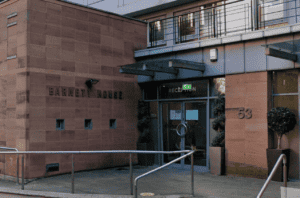
Our hair transplant clinic is easily accessible to those in the North West and are based in Manchester. Find us in Manchester City Centre:
53 Fountain Street
Manchester
M2 2AN
Our clinic in Manchester is easily accessible for those coming by city transport links. Our closest stops are:
- MetroLink: Piccadilly Gardens
- Train: Manchester Piccadilly Station
- Bus: Piccadilly Gardens Bus Station
Equally, if you’re travelling by car, there are plenty of motorways enabling visitation from all over the North West of England.
Who Needs a Beard Transplant?
 Men with genetically sparse facial hair often seek beard transplants to achieve facial hair they could never grow naturally. Genetic limitations are one of the most common reasons for thin or patchy beards.
Patients experiencing patchiness or asymmetry in facial hair may also benefit. This is often caused by uneven hair follicle distribution, hormonal imbalances, or mild trauma. Transplanting new follicles restores balance and symmetry.
Individuals with facial scarring due to burns, injuries, or surgical procedures can use beard transplants to restore hair over affected areas. Grafts help camouflage scars and reestablish natural hair flow across the face.
Transgender men undergoing gender-affirming treatment may also undergo beard transplantation as part of their transition process. This helps in achieving masculine facial features by creating a full, well-contoured beard.
Which Beard Areas Can Be Transplanted?
Jawline transplantation adds definition and structure to the lower face. It’s especially helpful for men with undefined or sparse beard edges, improving facial shape and contour.
Cheek area grafting fills in gaps and patchy zones, allowing for a denser beard or sideburn extension. This region often requires attention to angling for a natural look.
Chin transplants focus on the central beard area. Filling this region adds volume and completes goatee-style facial hair, which is one of the most requested styles.
Moustache transplants define the upper lip and enhance masculine features. We use single-hair grafts in this area to ensure precision and natural spacing.
Sideburn restoration helps connect the beard to the scalp hairline. This is important for men with thinning sideburns or those seeking a seamless flow between beard and temple hair.
Neckline grafting creates a fuller lower beard appearance and can extend or shape the beard contour under the jaw and chin, which helps define the profile.
Best Beard Transplant Method
 More specifically, when using the highly recommended FUE technique, the hair follicles are extracted with a tiny disposable tool from the back of the head. After that and before being planted on the beard area, they are kept at a specific temperature in a special solution that helps with their later development.
Unlike other hair transplant methods, the FUE procedure protects the patient’s follicles from necrotic cuttings and being destroyed from the environment. Finally, with the use of the FUE Implanter (which has a r diameter less than 1mm) the hair follicles are implanted in the desired face region.
We recommend the Follicular Unit Extraction (FUE) technique because unlike other facial hair transplant methods and non surgical hair replacement it does not involve scalpels, reception incisions, holes in the recipient area or stitches. Furthermore, with the FUE technique more than half of the implanted hair follicles survive.
How Many Grafts Are Needed for a Beard Transplant?
Graft count depends on the beard style and the extent of coverage required. A full beard restoration typically requires 2,500–3,000 grafts, ideal for men starting with minimal facial hair.
A goatee and moustache combination may require around 1,200–1,800 grafts, focusing only on the central and upper lip area for a classic masculine look.
If the goal is to restore sideburns only, 400–600 grafts usually suffice. These are often requested for men with natural thinning or hair loss due to previous cosmetic procedures.
Patch repair cases are more targeted and use between 300–800 grafts to fill small gaps in specific facial regions without redesigning the entire beard.
Each patient undergoes a density calculation using digital facial mapping to achieve optimal graft distribution and natural design flow.
What Is the Recovery Process Like?
In the first 3 days, mild redness and swelling may occur around the grafted area. This is temporary and can be controlled with cold compresses and prescribed medications.
By day 4 to 7, small crusts form around each graft and naturally fall off. It is important not to scratch or rub the area during this time to avoid dislodging grafts.
Between week 2 and 3, the transplanted hairs enter a shedding phase. This is expected and indicates that follicles are transitioning into a new growth cycle.
By months 2 to 4, new beard hair begins to grow. Initial growth may be thin or wavy, but will improve in texture and thickness over time.
Between month 6 and 9, patients see major density improvements. This is when the beard becomes visibly thicker and starts to match native hair texture.
Final results are visible between 12 and 14 months, including full density, direction, and hair integration.
Will the New Beard Hair Look Natural?
Yes, a beard transplant looks completely natural when performed with correct technique. The direction and angle of each follicle are matched to the native beard growth in real time during the procedure.
In high-visibility areas, such as the moustache and goatee, we use only single-hair grafts to avoid clumping and ensure the beard looks soft yet full. This technique prevents an artificial or “pluggy” appearance.
In areas like the jawline and cheeks, we densify the hair using multi-hair follicular units, arranged in a pattern that mimics the natural swirl and angle of the beard.
We also match hair curl, texture, and direction to the surrounding areas, ensuring seamless integration with existing facial hair.
Are Beard Transplants Permanent?
Yes. Beard transplants are considered a permanent solution for facial hair loss because the transplanted hair is harvested from the back of the scalp, an area genetically resistant to DHT (dihydrotestosterone), the hormone responsible for male pattern baldness so they won’t fall off.
Once implanted and healed, these hairs behave like they would at the back and sides of the head (the area that they got harvested from). So the will grow like normal. They can be groomed, styled and shaved.
With proper care, 90–95% of grafts typically survive, ensuring long-term stability and natural appearance.
Are There Any Risks?
A beard transplant is a low-risk procedure when performed by qualified medical professionals. However, as with any surgery, there are minor risks to consider. Some patients may experience folliculitis, a temporary inflammation around grafts. This usually resolves with topical treatment.
Mild swelling or redness can occur in the implant and donor areas, typically subsiding within 3 days. Uneven density or minor asymmetry may happen in rare cases, and is usually corrected with a touch-up session if needed.
Scarring at the donor site is minimal and not visible due to the FUE technique, which avoids linear scarring and allows for rapid healing.
Beard Transplant Cost in Manchester
The cost of a beard transplant depends on the extent of the area being treated and the number of grafts required. As a general guide:
- Sideburns only: 400–600 grafts — from £3,500
- Goatee and moustache: 1,200–1,800 grafts — from £4,000
- Cheeks (one side): 2,000–2,500 grafts — from £5,000
- 2,500 grafts (FUE): £6,000–£6,500 depending on case complexity
- 3,000 grafts (FUE): £7,000
A full beard restoration covering the moustache, goatee, and both cheeks is a significant undertaking. Because each full cheek alone requires around 2,000–2,500 grafts, a complete beard is typically carried out as a 2-stage procedure requiring approximately 6,000 grafts in total. Your patient advisor will discuss all options and costs with you in detail.
We offer flexible finance options to help spread the cost of your procedure. For a full breakdown of our pricing, visit our dedicated hair transplant cost page.
Why have your Beard Transplant With Us
At the Manchester Hair Transplant Clinic, all beard transplants are performed by GMC-registered surgeons with years of experience in facial hair restoration. We specialise in natural follicle direction, micro-graft angling, and beard design tailored to ethnicity and facial structure.
Clinics are CQC-registered, ensuring surgical-grade sterility, medical compliance, and a safe patient environment. We use advanced FUE techniques, minimising scarring and reducing healing time. Every transplant is designed using facial mapping technology to maximise natural results.
From consultation to follow-up, we provide comprehensive care, guiding you through every stage of your beard restoration journey.
Did You Know?
In 2012 in Britain there was a 12% increase in demand for facial hair transplants from the year before. This translates to 4,500 British men actually going through the procedure. The 10% yearly decline in sales of razors and blades is another sign that this procedure will be growing in popularity alongside the bearded- look trend. Beard transplants are safe and pain free and take between two to five hours and rarely requires a second visit to the specialist. During the procedure hairs are transplanted to the face from the area at the back of the head of the patient (also known as the “donor area”).
Conclusion
Beard transplants have emerged as a transformative solution for individuals seeking to enhance their facial appearance by addressing issues of beard thinning or lack of growth. With advanced techniques such as Follicular Unit Extraction (FUE) and Direct Hair Implantation (DHI), patients can achieve natural-looking, customisable, and enduring results in beard restoration.

Frequently Asked Questions
The cost of beard and facial hair transplants will depend by the number of grafts that are needed. The more grafts, the more time and work that is required, so the price will be reflected in this. In general they tend to cost around the £3,500 to £6,500 mark. We do have finance options available to help out by spreading the cost of a procedure.
When any part of the skin is broken, it does leave a faint scar that heals over time. It’s the same with beard transplants, however the instruments that our surgeons use are less than 1mm in diameter so the initial scarring won’t be visible in the beard, moustache and sideburn areas by the naked eye.
A beard transplant is a relatively pain free procedure. The main reason is that it is performed under local anaesthetic and so a patient may feel a slight discomfort in the area. Post surgery, you may experience slight inflammation and redness in the area.
Our general advice is to not shave the area for the first 2 weeks after the procedure. This is because the area may be swollen and tender for the first few days post procedure. We also advise not to disturb the transplanted hairs for the first couple of weeks at least so we would advise you to refrain from touching or grooming the area.
A beard transplant is a permanent procedure. The transplanted follicles are harvested from the DHT-resistant donor zone at the back of the scalp, meaning they are not susceptible to the hair loss process. Once healed, the results last a lifetime and can be groomed, shaved, and styled just like natural facial hair.
The majority of patients achieve their desired result in a single session. In some cases — particularly where very high density is required or the donor supply is limited — a second session may be recommended after the initial results have fully matured at around 12 months. Your surgeon will advise on the likely number of sessions during your consultation.
In the two weeks before your procedure, we advise stopping any blood-thinning medications (including aspirin and ibuprofen, unless prescribed), avoiding alcohol, and refraining from smoking, as these can affect healing and graft survival. On the day, arrive with a clean face and avoid applying any creams or products to the beard area. Your surgeon will provide full written pre-operative instructions at your consultation.
Patient Testimonials
Aside from achieving fantastic results, we believe that keeping in touch with our patients before, during and after their hair transplantation procedure is paramount – it helps to keep our patients feeling calm and in control. We’re always on hand to provide guidance, support and aftercare advice. Time and again, our patients tell us that this is what sets us apart from other clinics.
You can read our great reviews of FUE hair transplants over on Google and Trustpilot